The truth about BCAA's
Ok, let’s start from the beginning of time. Ok, ok, not the beginning of time… let’s just start with PROTEIN.
Protein is one of three macronutrients in food (the others being fat and carbohydrate). Most athletes are interested in getting adequate protein in their diet because of its role in building muscle and helping the muscle to recover after exercise.
Proteins are made up of amino acids. There are 20 amino acids, these are: alanine, arginine, asparagine, aspartic acid, cysteine, glutamine, glutamic acid, glycine, histidine, isoleucine, leucine, lysine, methionine, phenylalanine, proline, serine, threonine, tryptophan, tyrosine and valine.
Nine of the 20 amino acids are ‘essential’ for human adults, meaning, they cannot be made by the body and must be obtained through the diet. These are: histidine, isoleucine, leucine, lysine, methionine, phenylalanine, threonine, tryptophan and valine.
Protein containing foods that contain all 20 amino acids (including the nine essential amino acids) are sometimes referred to as ‘complete’ proteins. Complete proteins are usually animal-derived products such as meat, poultry, fish, dairy products and eggs, although there are some non-animal exceptions.
Ok, so far, so good. Most people with even a slight interest in nutrition tend to know all of the above. So let’s get into the nitty gritty of BCAA’s.
What are Branched Chain Amino Acid (BCAA) supplements?
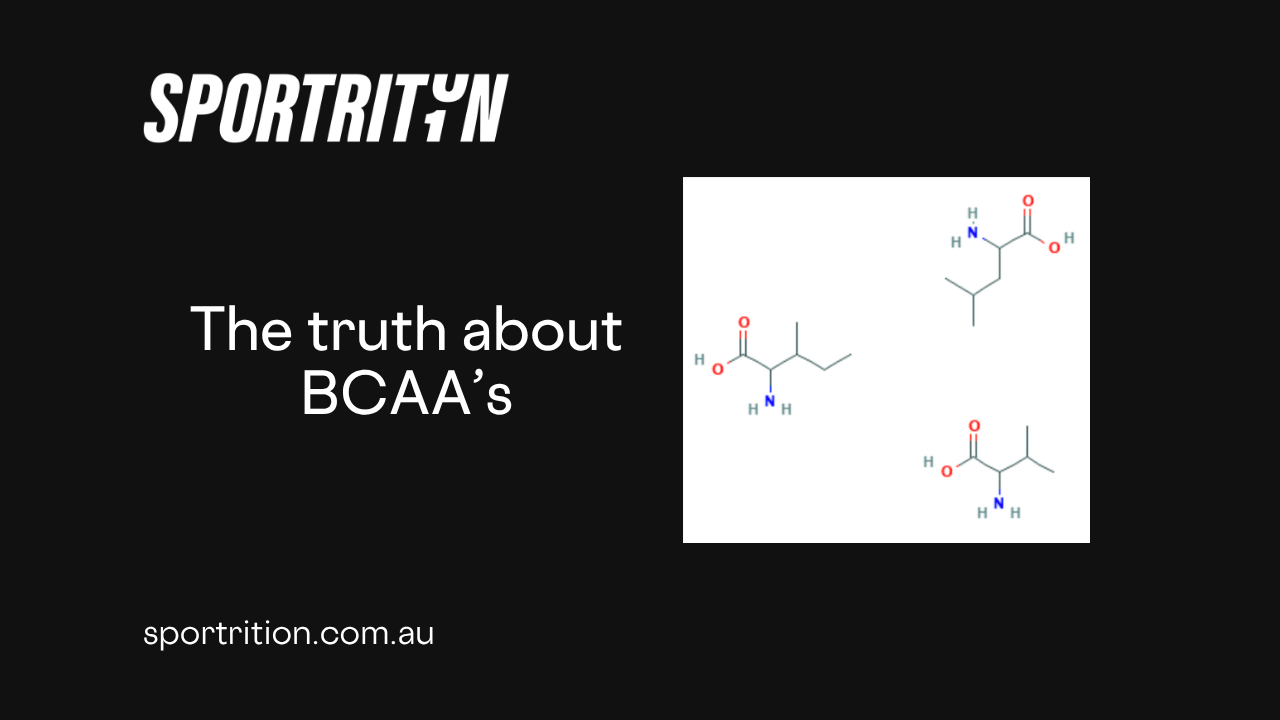
BCAA’s stands for: Branched Chain Amino Acids. The three branched chain amino acids are: leucine, isoleucine and valine. They are unique in that they can be metabolised in skeletal muscle. The other essential amino acids are metabolised via the liver. They are called ‘branched-chain’ because they have branched rather than linear aliphatic side chains (ok, ok, Erica, too much information).
But you said complete proteins contain ALL the amino acids, so BCAAs are found in some protein-containing foods, right?
YES. BCAAs are found in some protein-containing foods. Good, glad we cleared that up.
What about leucine? It seems to get a lot of attention?
Leucine is a pretty cool amino acid – it is basically responsible for processes in the body that switch on muscle protein synthesis (the building of muscle). We actually need a dose of ~2-3g of leucine alongside or within the protein in order for this process to occur.
How do we get adequate leucine from foods, to ensure we are ‘switching on’ muscle protein synthesis?
Well, you know how your sports dietitian always tells you to aim for 20-30g of animal protein (i.e meat, poultry, fish, dairy products or eggs) in each of your meals/snacks (i.e. 4-5 x per day) in order to stimulate muscle protein synthesis? That’s because ~20-30g of protein from an animal source, contains ~2-3g of leucine. Cooooool. No need for BCAA supplements then, correct? Correct.
In fact, BCAA supplements are not superior to food sources of BCAAs. Why would they be? They are the same amino acids.
So why the hype around BCAA supplements?
Well, I gave this question some deep thought (not really) and came up with these two words:
Impeccable Marketing.
But surely SOMEONE might benefit from BCAAs?
Well, ok, I can think of three possible scenarios:
1. Some people with impaired digestion or absorption where single form amino acids might have a better uptake.
2. Some people in ultra endurance events (several hours in duration) where some protein is necessary over that time, but where consumption and digestion of whole foods is impractical.
3. Some vegetarians or vegans who have a highly restrictive eating patterns/food choices (meaning they don’t get enough of each amino acid from whole foods)
All these situations are pretty unique. Even then, you would need to discuss your needs with an Accredited Sports Dietitian.
Don’t forget – like all supplements, BCAA supplements come with the risk of contamination with banned substances. On average, 12 Australian athletes are banned from sport each year due to contaminated supplements. To better understand the doping risk when it comes to supplement use, you can watch my YouTube video on Safe Supplement Use HERE.
P.S. – You can get 20-30g of complete protein from these amounts of foods:
– ~ 3 extra large eggs
– ~250ml liquid egg whites (eg Puregg brand)
– ~120g fresh meat, poultry or fish (raw weight)
– ~1.5 small tins of tuna or salmon
– ~1.5 cups of a high protein milk (eg The Complete Dairy brand)
– ~80g hard cheese
– ~1 cup cottage cheese
– ~250g high protein yoghurt (eg Chobani or YoPro)
P.P.S. here are a couple of great (and readable) articles about protein, amino acids and the magic of leucine: